

Work · Santiago Apóstol parish
Underpinning and ground improvement beneath a parish church whose foundations were not as designed
Cracks in the church and the parish house. Trial pits revealed that the piles in the 1981 design had never been built. We injected the ground beneath footings and ground beams, and confirmed the improvement with cross-hole tests.
Objective
Santiago Apóstol parish in Jaén is two joined buildings: the church, designed in 1981, and the adjoining parish house, built in the 2003 refurbishment. Both showed 45° cracks in external walls and partitions, damp and deformation, worse in the parish house and on the north and south façades of the church. The parish commissioned us to carry out the underpinning and remedial works designed by the project’s technical team.
Difficulties
- Foundations that were not as designed. Beneath the church, the 1981 design provided for groups of two 45 cm, 10 m piles joined by pile caps. The 2021 trial pits found neither piles nor pile caps: only ground beams and the odd block, bearing at between 0.60 and 2.00 m deep.
- A weak soil that changes volume. Beneath up to 4 m of fill lie clayey marls of medium to high expansivity, with soft spots. At formation level, the allowable bearing pressure was around 0.55–0.93 kp/cm².
- Voids and water beneath the slabs. Ground-penetrating radar found voids beneath almost all of the nave’s ground slab and a dip of about 15 cm beneath the garage entrance. The ground beneath the slabs was constantly damp.
- Two buildings, two behaviours. The parish house stands on footings and ground beams; the church, on inadequate shallow foundations. Each needed its own treatment.
Solution
The work began by getting to know the ground and the foundations: a geotechnical investigation (2018), 3D ground-penetrating radar (2019) and, once on site, trial pits beneath the church’s columns.
In the parish house we carried out reinforced cement-bentonite grout injections through sleeve pipes. The boreholes pass through the footings and each one is left with a steel tube with valves every 50 cm. Grout is injected under pressure through each valve in successive passes of 100, 75, 75 and 50 litres, until the set pressure is reached. The treatment is concentrated beneath the core of each footing and extends, less deeply, beneath the ground beams and the garage façade wall. Because sleeve pipes allow the injection to be repeated, a second phase re-injected microcement through the same tubes.
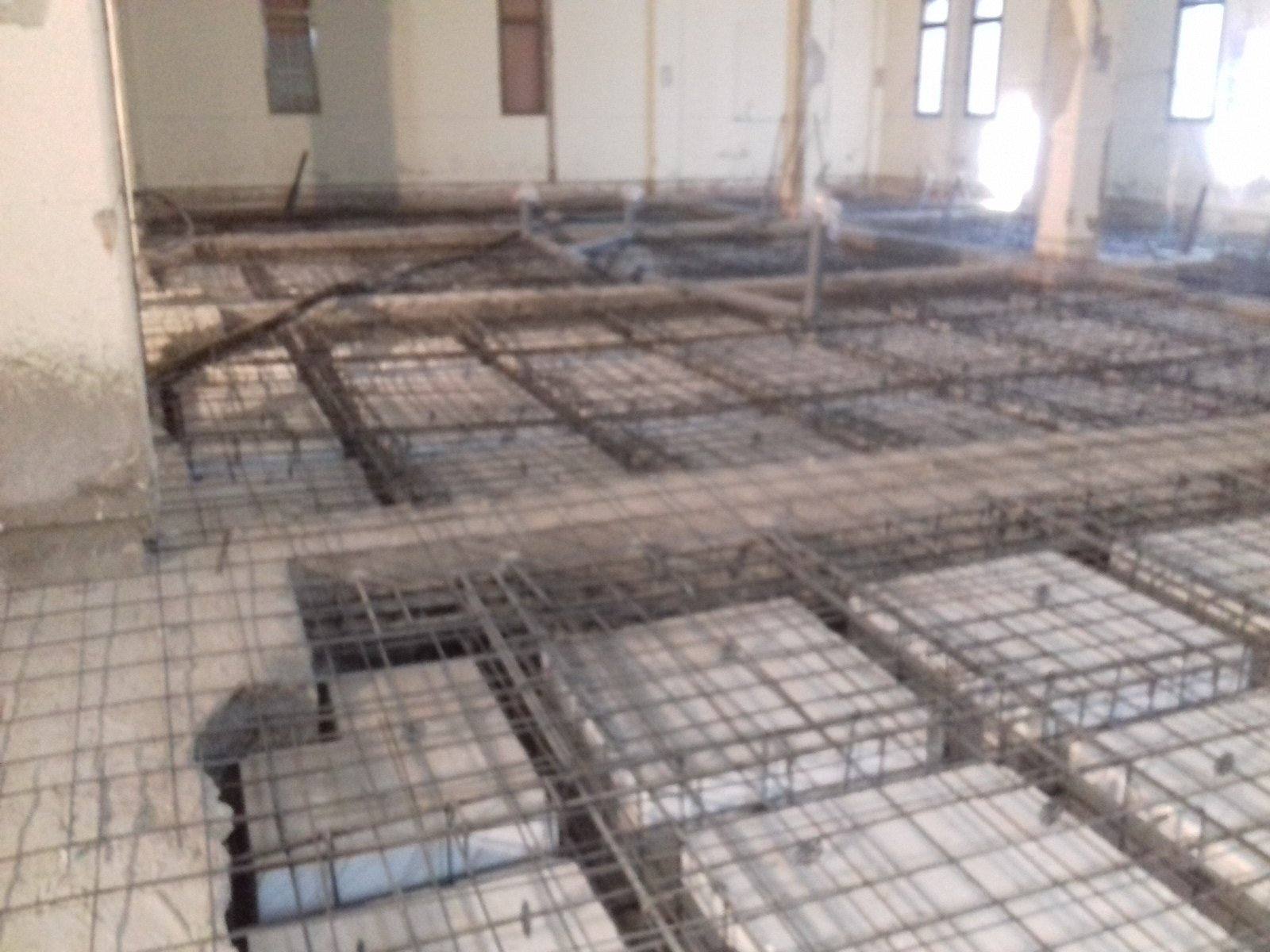
When the trial pits showed that the church had no piles, the technical team extended the works. A voided slab was built beneath the church to brace and complete the existing foundations, and in the most damaged areas, such as the chapels, the ground was treated with injections. Drilling, injected volumes and the building’s levels were monitored throughout. The cracks in walls and partitions were stitched with steel staples before the finishes were repaired.
Result
The effectiveness of the treatment was measured with cross-hole tests: the velocity of seismic waves between boreholes, before and after injecting. In the first campaign (January–March 2021), the shear-wave velocity rose by between 92 % and 104 % at 3 and 4 m deep. In the second (July–October 2021), with two tests down to 7–8 m, the dynamic stiffness modulus rose by between 59 % and 237 % (XH-1-2) and between 48 % and 241 % (XH-1-3), mainly between 3 and 4 m.
These tests show an improvement in the stiffness of the ground at the points tested. They do not amount to an equal increase in bearing capacity.
Before
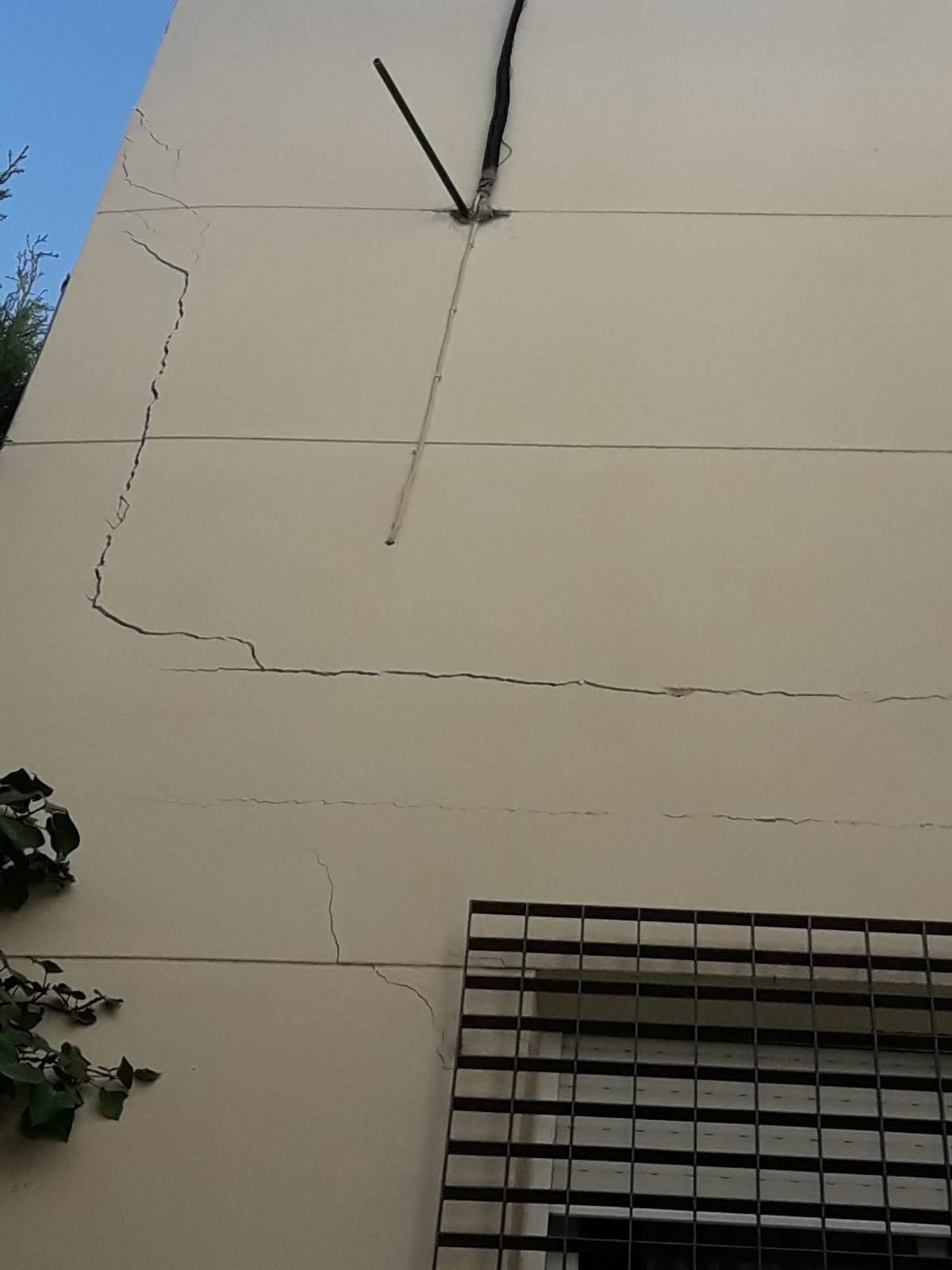
Crack in the façade 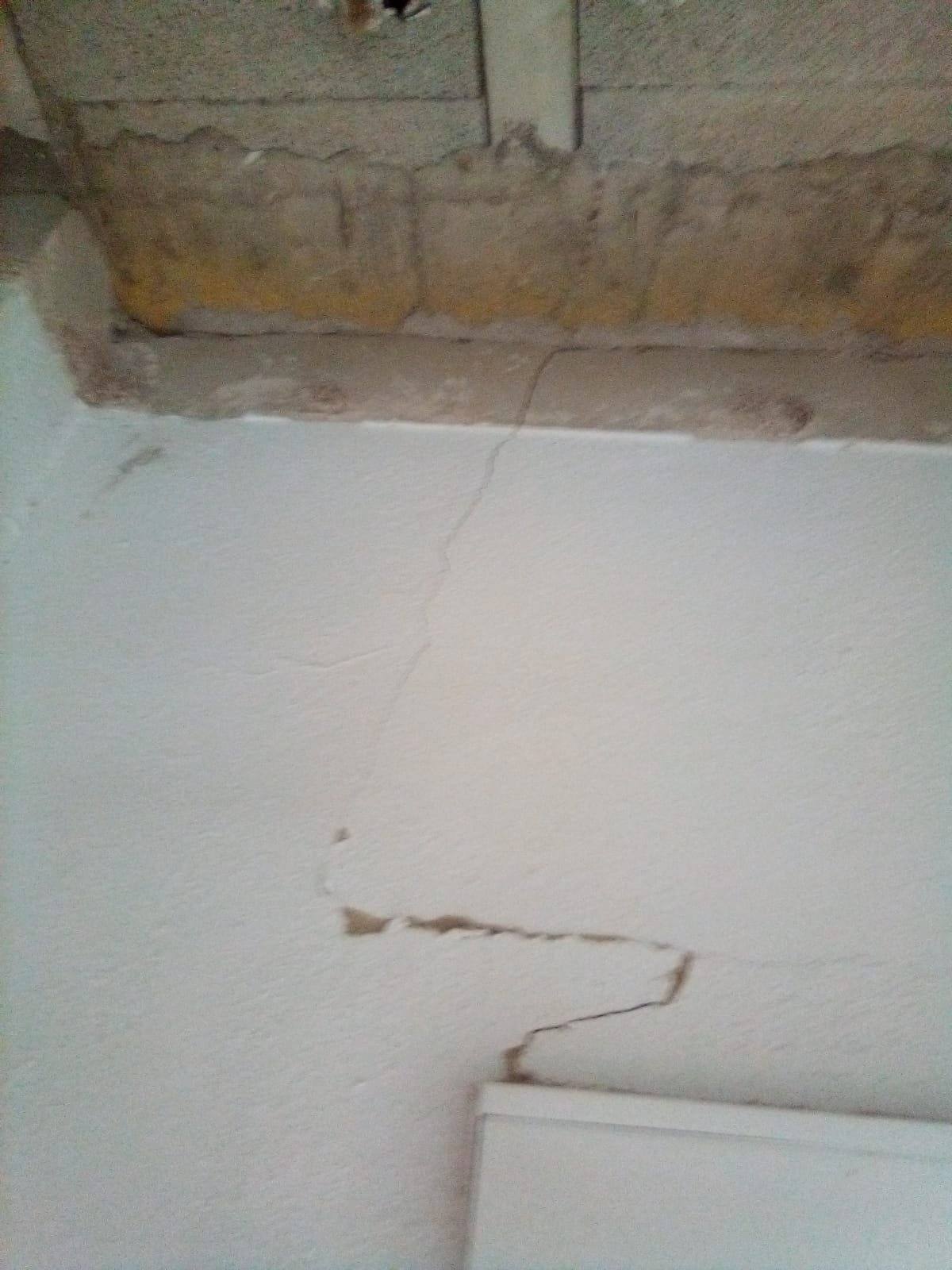
Crack above a window
During the works
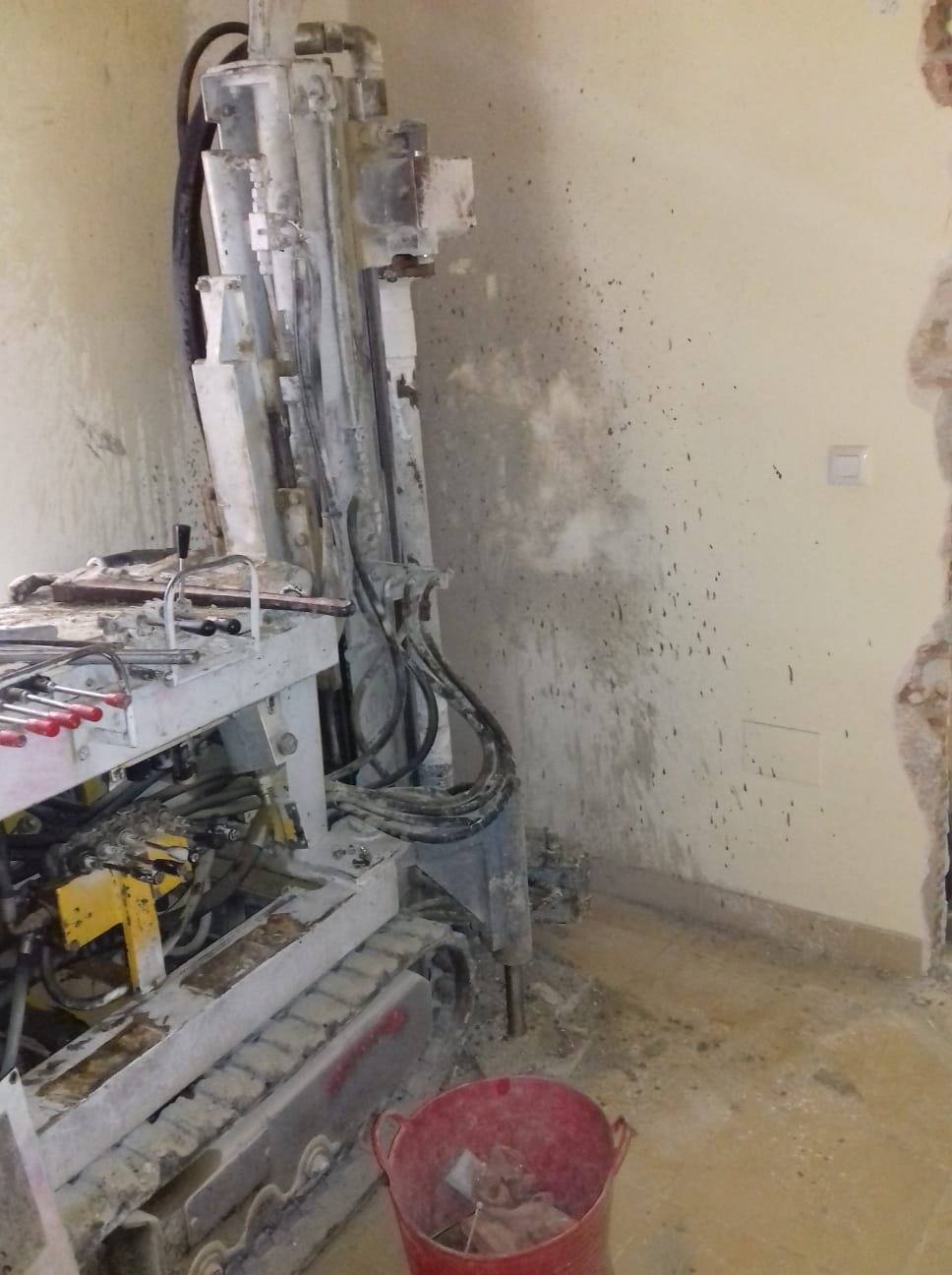
Drilling indoors 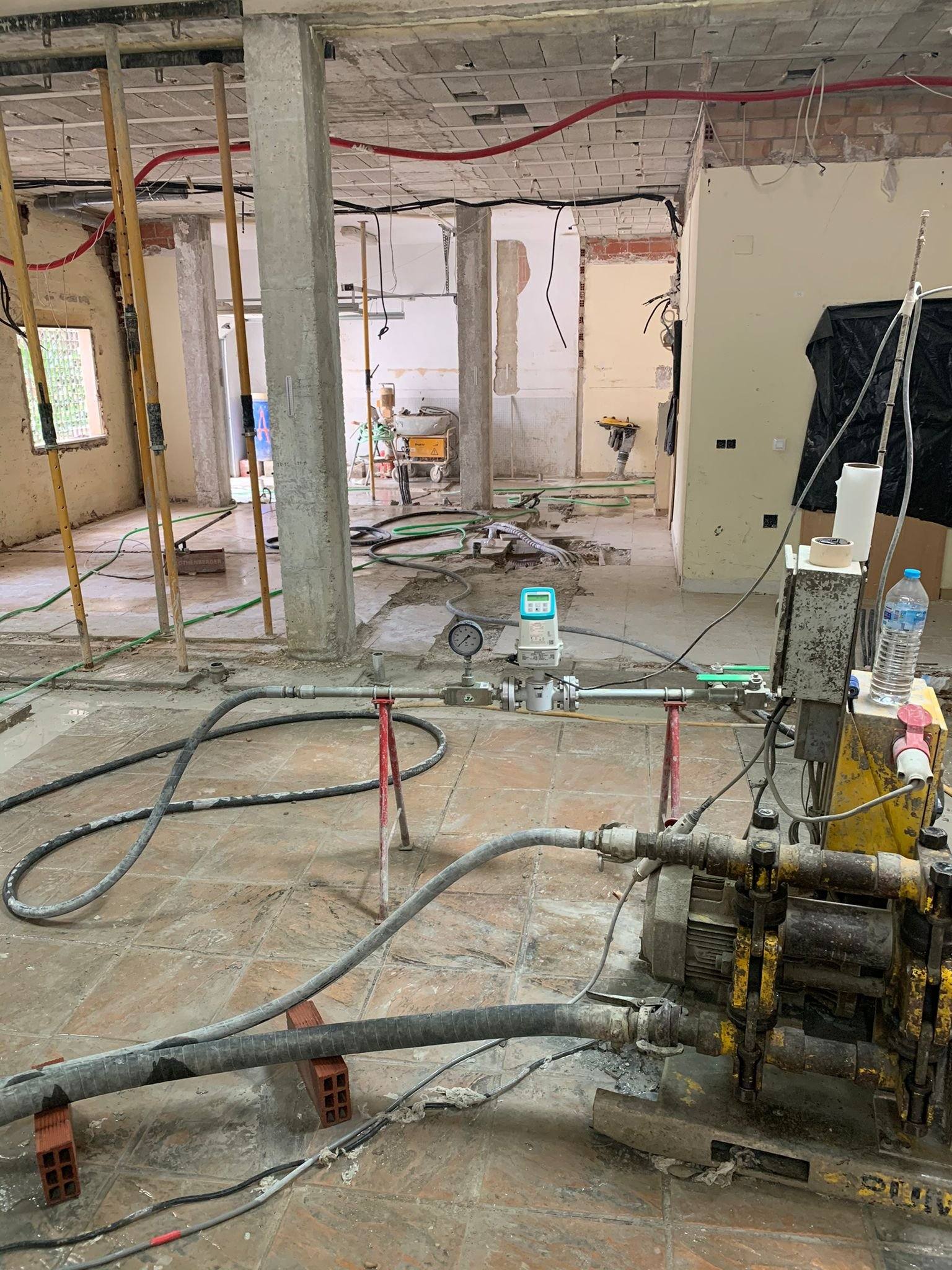
Injection equipment on the ground floor 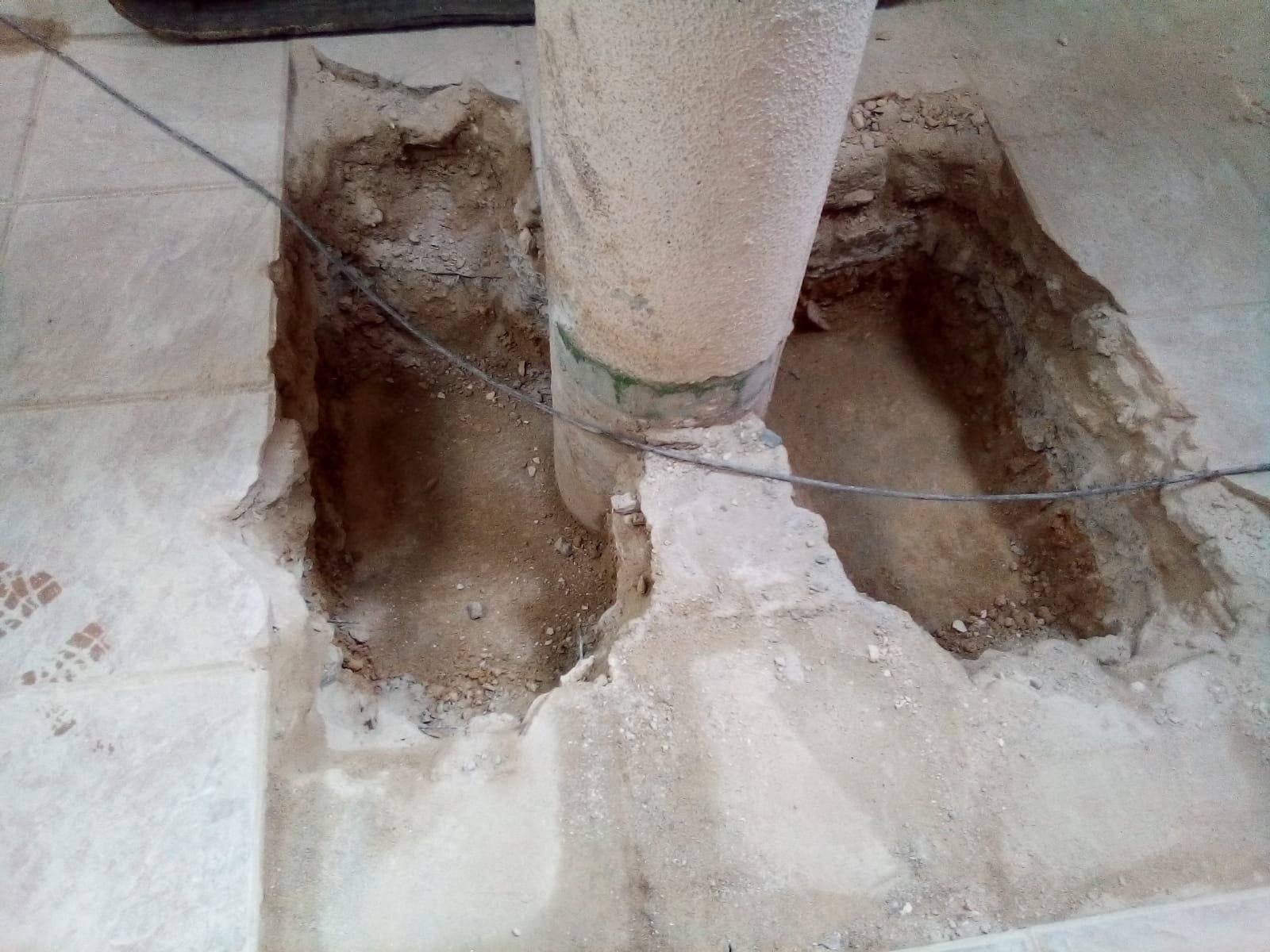
Trial pit at the foot of a column 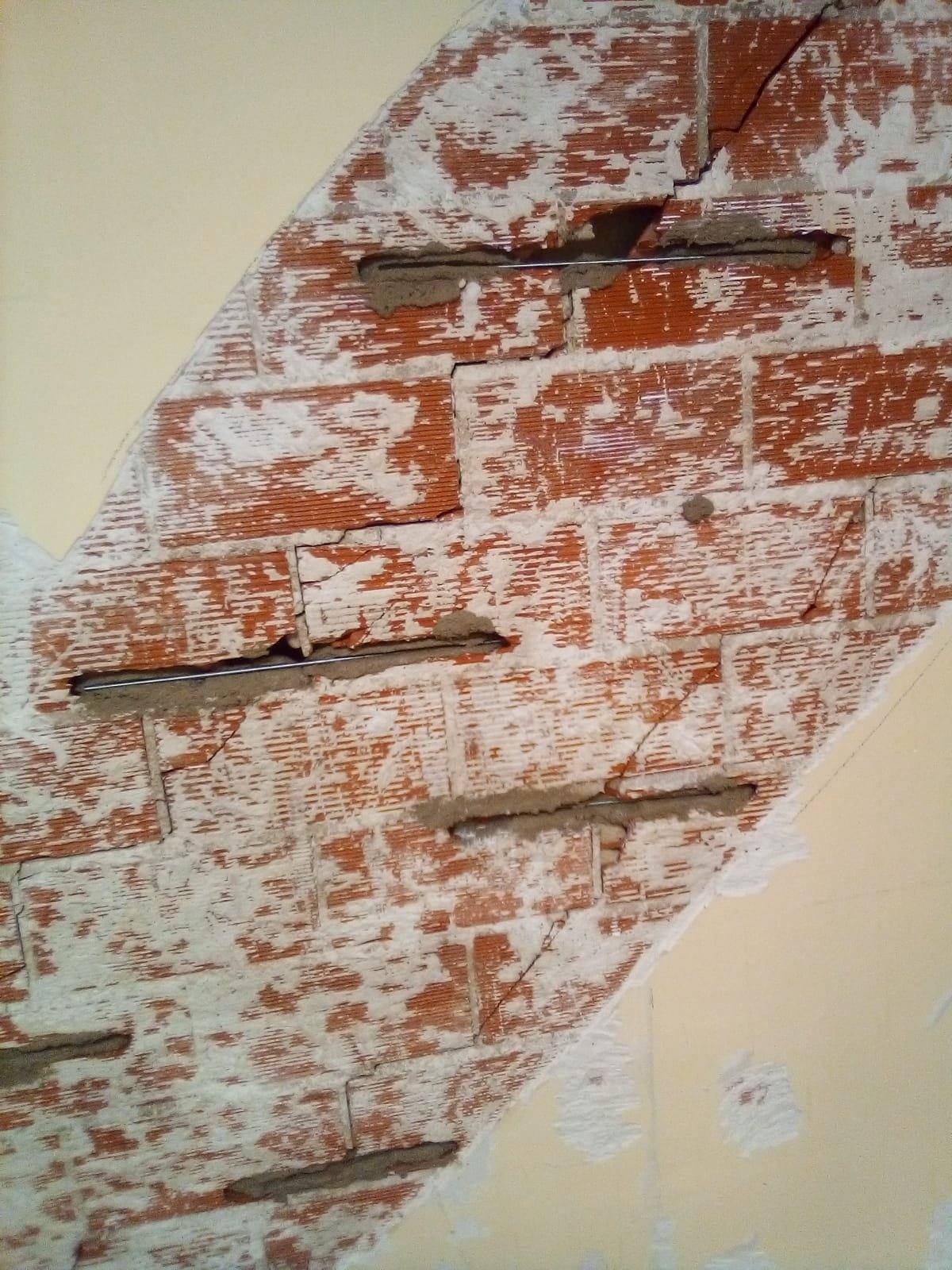
Crack stitching with staples 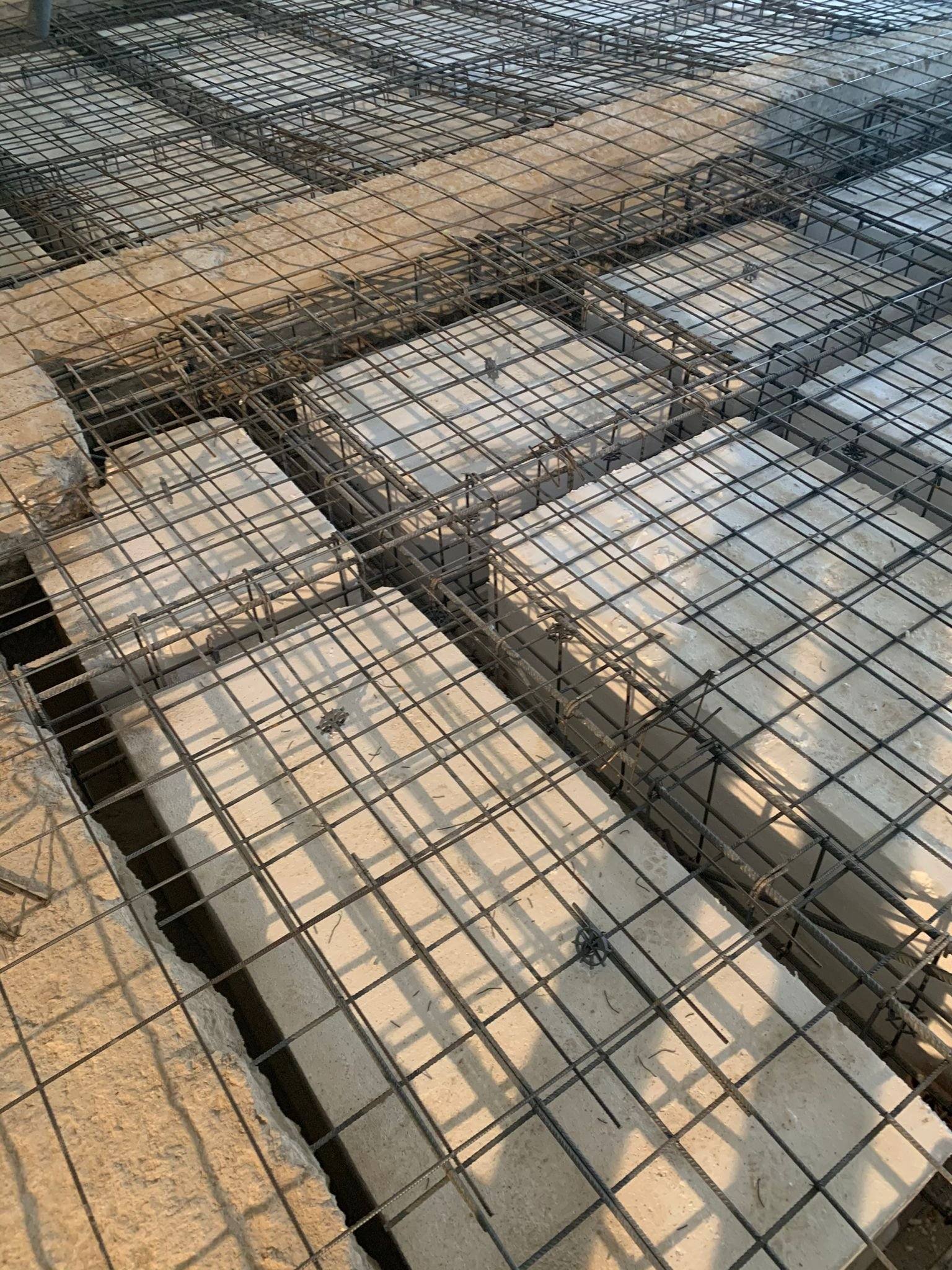
Void formers and slab reinforcement 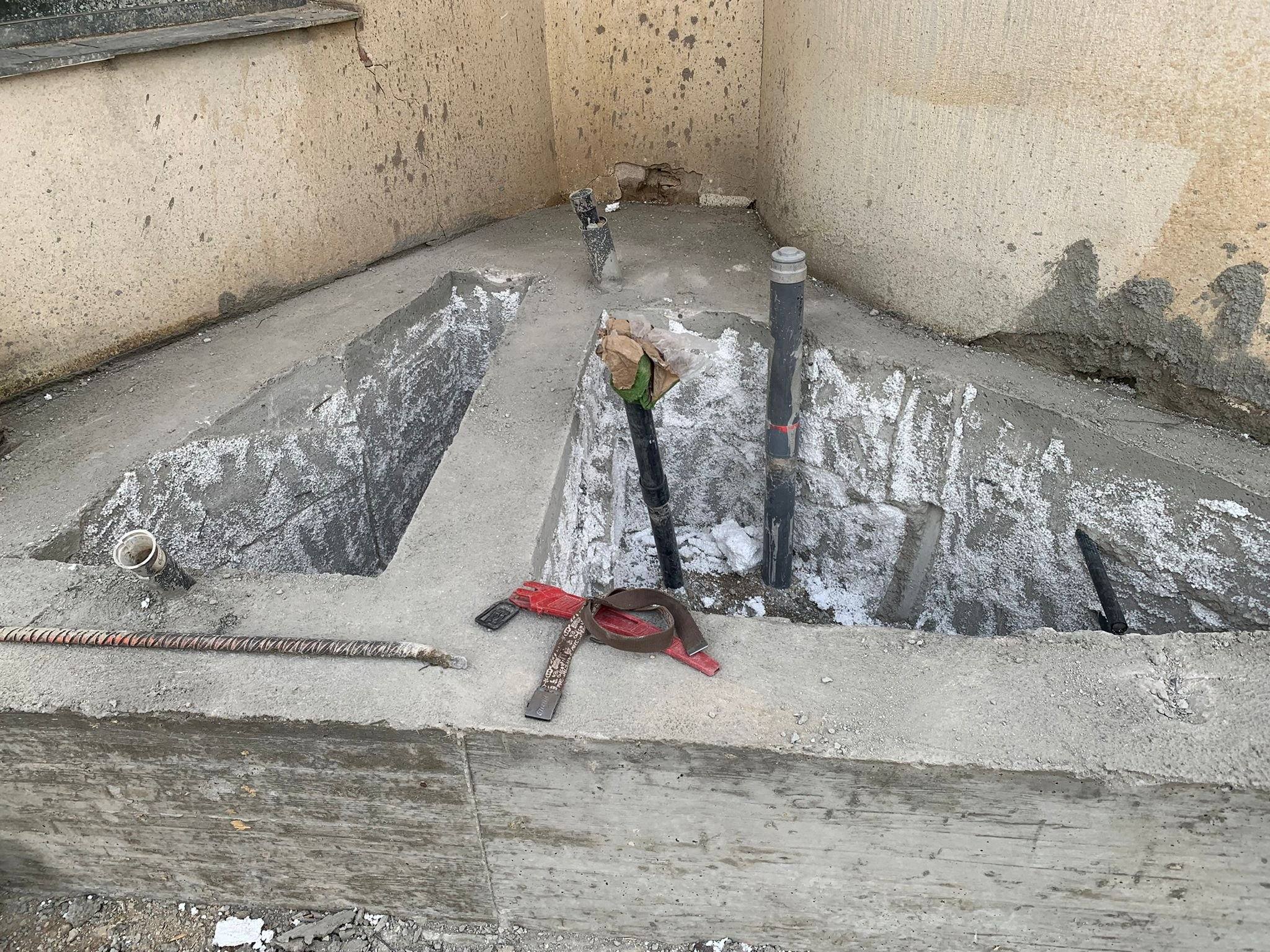
Injection tubes by the chapels
After
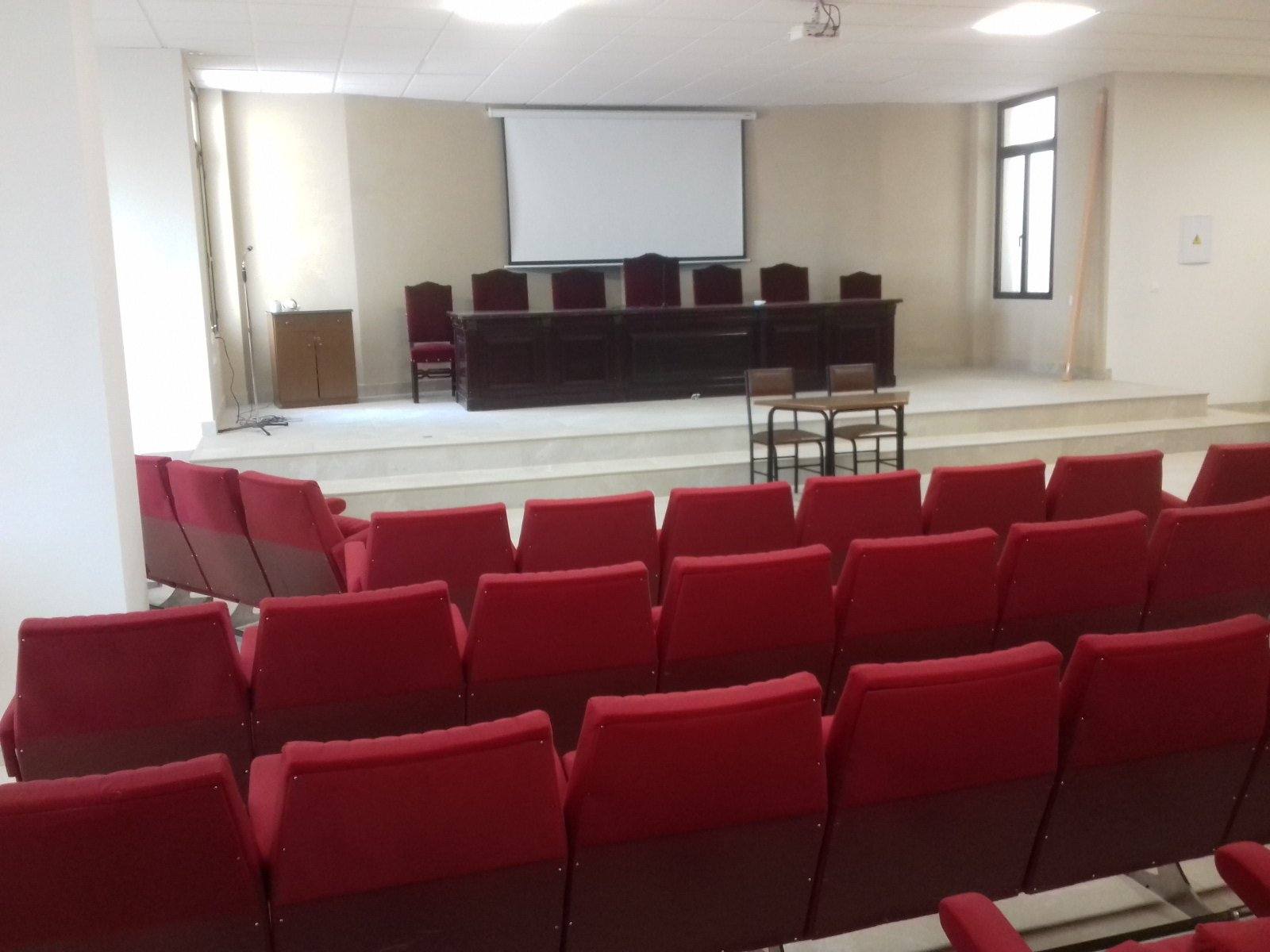
Ground floor completed