

Work · Industrial units in Jaén
Ground improvement beneath the future foundations of five industrial units
Before five industrial units were built on soft, expansive clays, we treated the ground with 299 cement-grout injections. Seismic tomography before and after recorded the improvement of the soil.
Objective
Five steel portal-frame industrial units on pad footings were to be built on a plot in Jaén. The natural ground could not carry the design bearing pressure of those footings. Before the foundations went in, it had to be improved at depth, and tests then had to show that the treatment had worked.
Difficulties
- Soft, expansive clays. Beneath the fill lie very soft clays down to 3–4 m and, below them, highly plastic clayey marls down to 6–7.6 m. The soil’s expansivity is high.
- Water in the ground. The water table is at about 2.5 m, and lenses of gravel carrying water run between the marls: the trace of a buried stream that can still be seen on aerial photographs.
- Two different loads. The portal-frame footings concentrate the load; the ground slabs of the units spread it. Each area called for a different treatment.
- Proving the effect. Injecting was not enough: the result had to be measured by comparing the ground before and after.
Solution
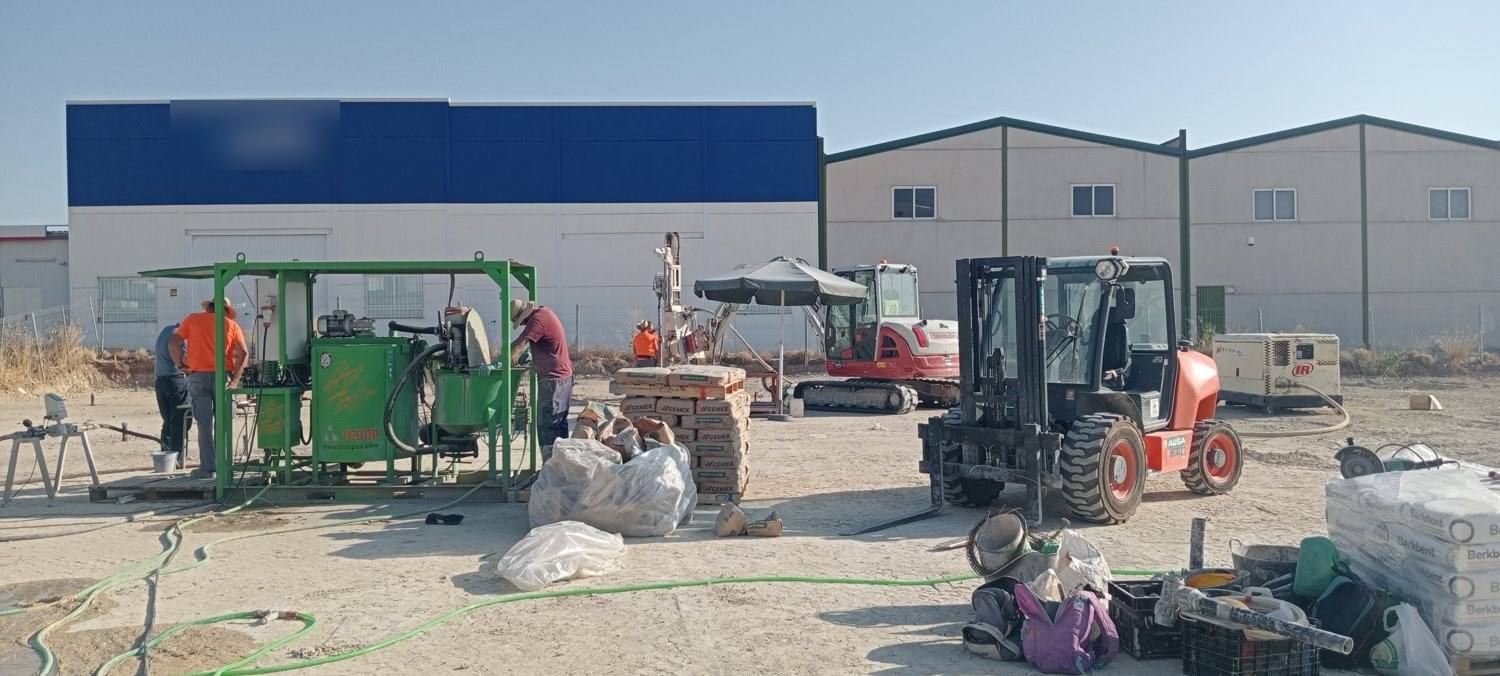
We treated the ground with 299 pressure injections of cement grout, through tubes with valves every 50 cm. Each tube was drilled, sealed with a sleeve grout and injected valve by valve. The treatment was adapted to each area:
- Beneath the footings, 94 N-80 steel tubes of 60.3 mm down to 6 m, by repeated selective injection: three successive passes per valve, of 100, 75 and 50 l. The steel tube stays in place as reinforcement for the treated ground.
- Beneath the ground slabs, 205 PVC tubes of 63 mm down to 4 m: 68 by repeated selective injection, in two passes, and 137 by single global injection, in one pass.
The target pressure rose with depth, from 1.5 kg/cm² near the surface to about 2.75 kg/cm² at 5.4 m. Each tube had its own control record, with opening and closing pressures, flow and volume. In all, 374,216 l of grout were injected, against the 375,300 l planned, with a water/cement ratio of 1 and bentonite.
Result
The same five seismic refraction tomography profiles were measured before and after the treatment. In the profiles investigated, the mean P-wave velocity rose by between 58 % and 148 %, and the S-wave velocity by between 23 % and 184 %, mainly in the top 4–5 m. In the weakest profile, the minimum S-wave velocity went from 73 to 192 m/s.
An independent laboratory also carried out a pressure and intake test on 50 valves of 25 tubes beneath the footings and rated it a PASS.
These checks document a favourable effect of the treatment in the areas and depths studied. They are measurements of the ground’s dynamic stiffness, not a load test on the foundations.
Before
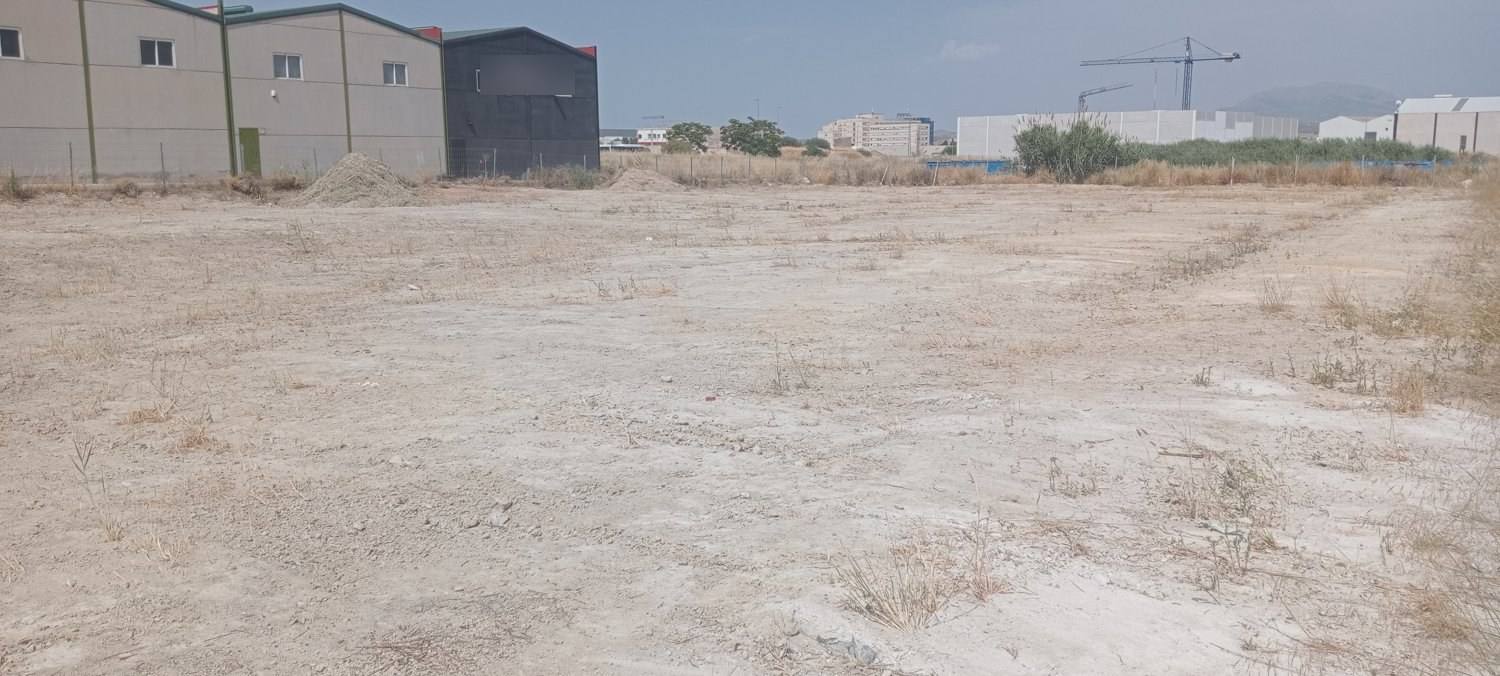
The plot before the works
During the works
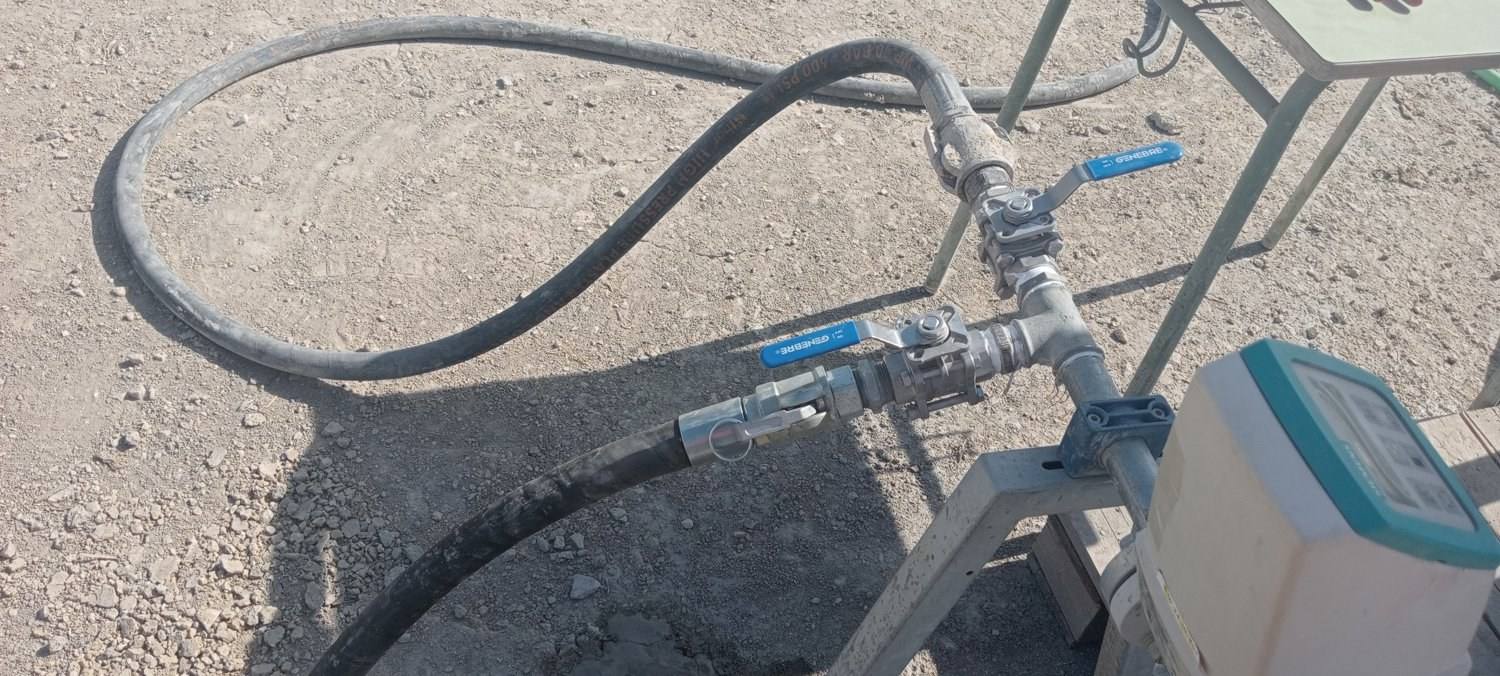
Grouting manifold and valves 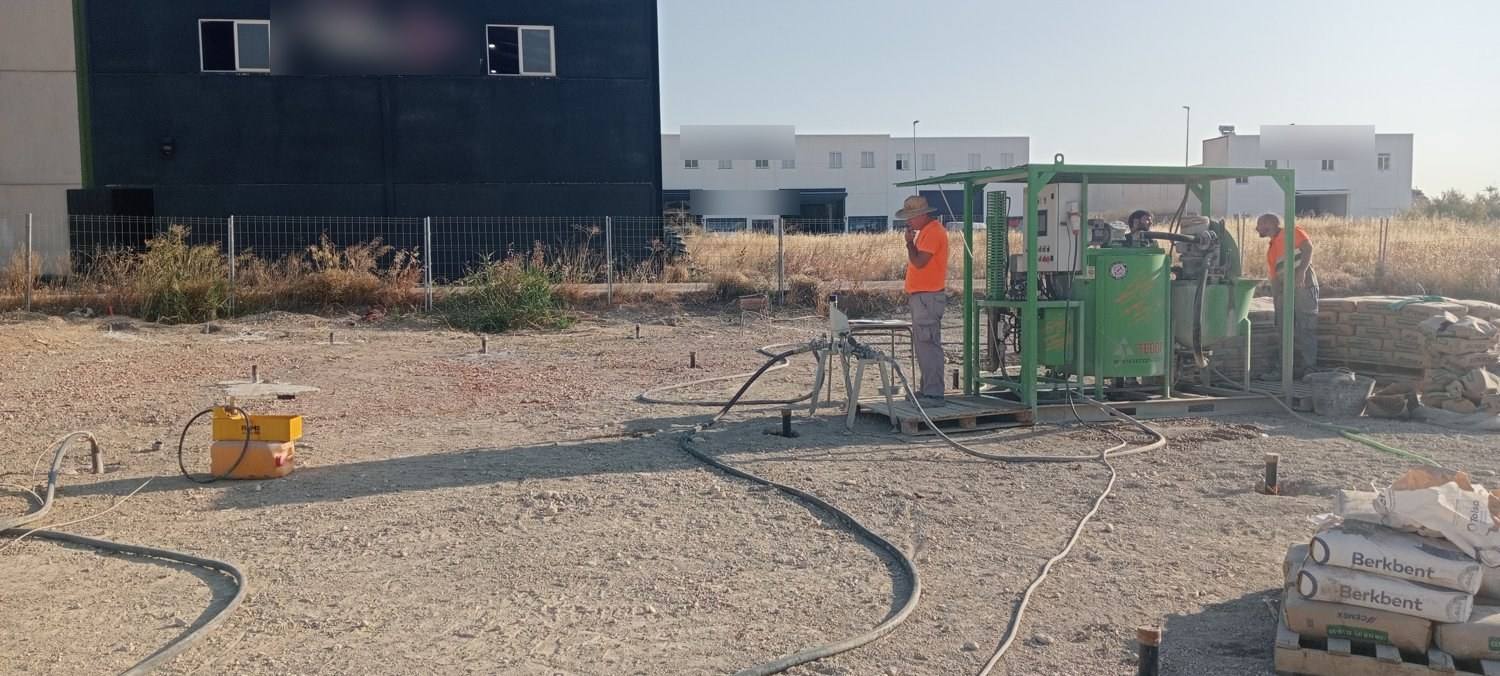
General view during the works