

Work · Residential buildings in Córdoba
Ground consolidation beneath two occupied residential buildings
Two blocks of flats showed damage from differential settlement. We consolidated the foundation soil with cement-grout injections and measured the improvement with cross-hole tests before and after.
Objective
The Andalusian Housing and Rehabilitation Agency (AVRA) commissioned the consolidation and rehabilitation of two residential buildings in Córdoba: C2, with blocks 3 and 4, and C4, with blocks 6 and 7. Damage linked to differential settlement of the ground had been found. The soil supporting the foundations of buildings that remain occupied had to be treated.
Difficulties
- Existing buildings. The treatment is carried out beneath foundations that are already loaded, in a residential setting where every task had to be coordinated with the residents’ daily life.
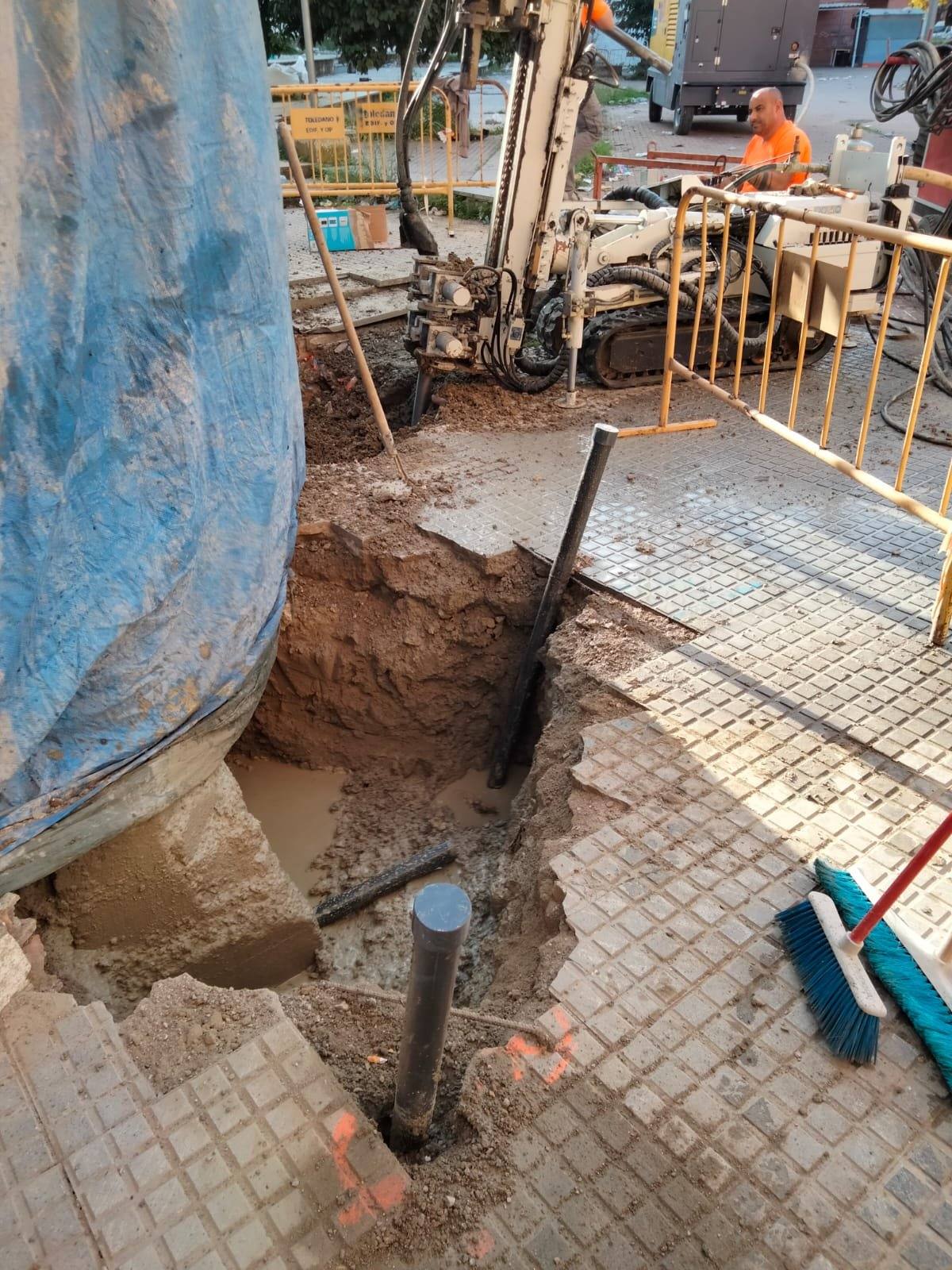
- Access to the treatment points. To reach the ground, trial pits had to be opened at the foundation pits and holes drilled from outside and from inside the ground floors.
- Buried services. The drilling points were adjusted to the obstacles and existing services as the work went on.
- Ground unlike what was expected. A layer appeared beneath the ground slab that hampered the original drilling system.
Solution
We consolidated the ground with targeted cement-grout injections and accompanied the treatment with topographic monitoring of the buildings.
- Trial pits and reference points. We opened trial pits at the foundation pits to inspect the footings and installed reference points for precise levelling of the buildings.
- Drilling adapted to the site. When the layer beneath the ground slab held back the planned system, we brought in specialist equipment. To clear an electrical cable duct, we guided the raking boreholes with 200 mm PVC sleeves.
- Controlled injection. The grout was pumped from an injection plant with a control panel, with a flow meter and pressure gauge on the line.
Result
The ground was measured with a cross-hole geophysical test before the treatment, on 27 January 2025, and after it, on 17 June 2025, in the same borehole pair XH-01. The later report records an improvement and a more uniform distribution of the ground’s dynamic properties, especially in the shallowest materials:
- In the top six metres, the dynamic stiffness modulus rose by between 95 % and 400 %, with the largest differences between one and three metres deep.
- Between 0 and 3 m, the dynamic Young’s modulus went from 0.15–0.27 GPa to 0.72–1.20 GPa.
- The loose fill in the top three metres, initially classed as T1 ground, came to behave geophysically as T2 ground.
These measurements confirm a better dynamic response of the ground around the test. On their own, they do not prove that the defects have gone or that the bearing capacity has grown in the same proportion.
During the works
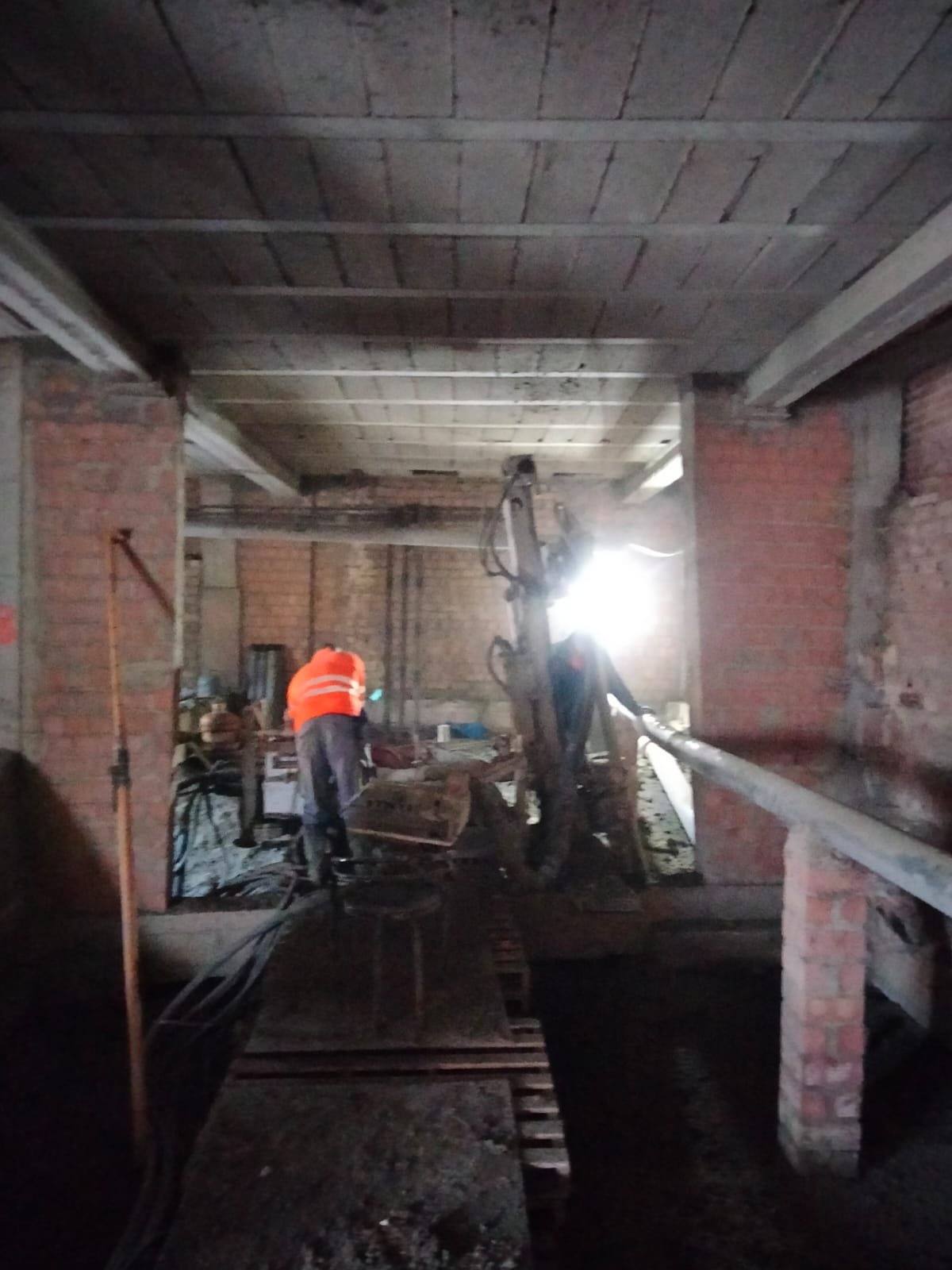
Drilling inside a ground floor 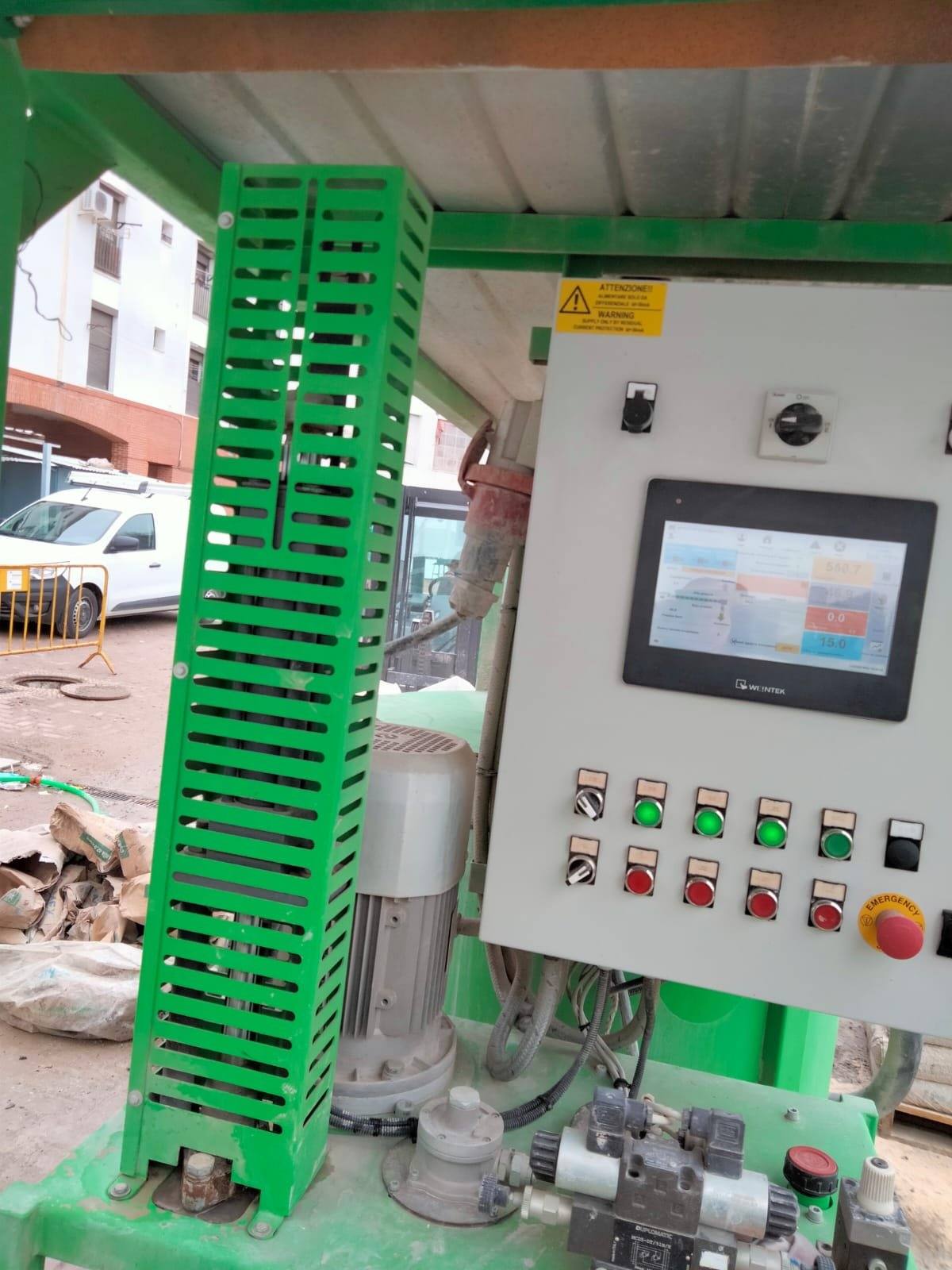
Grouting plant control panel 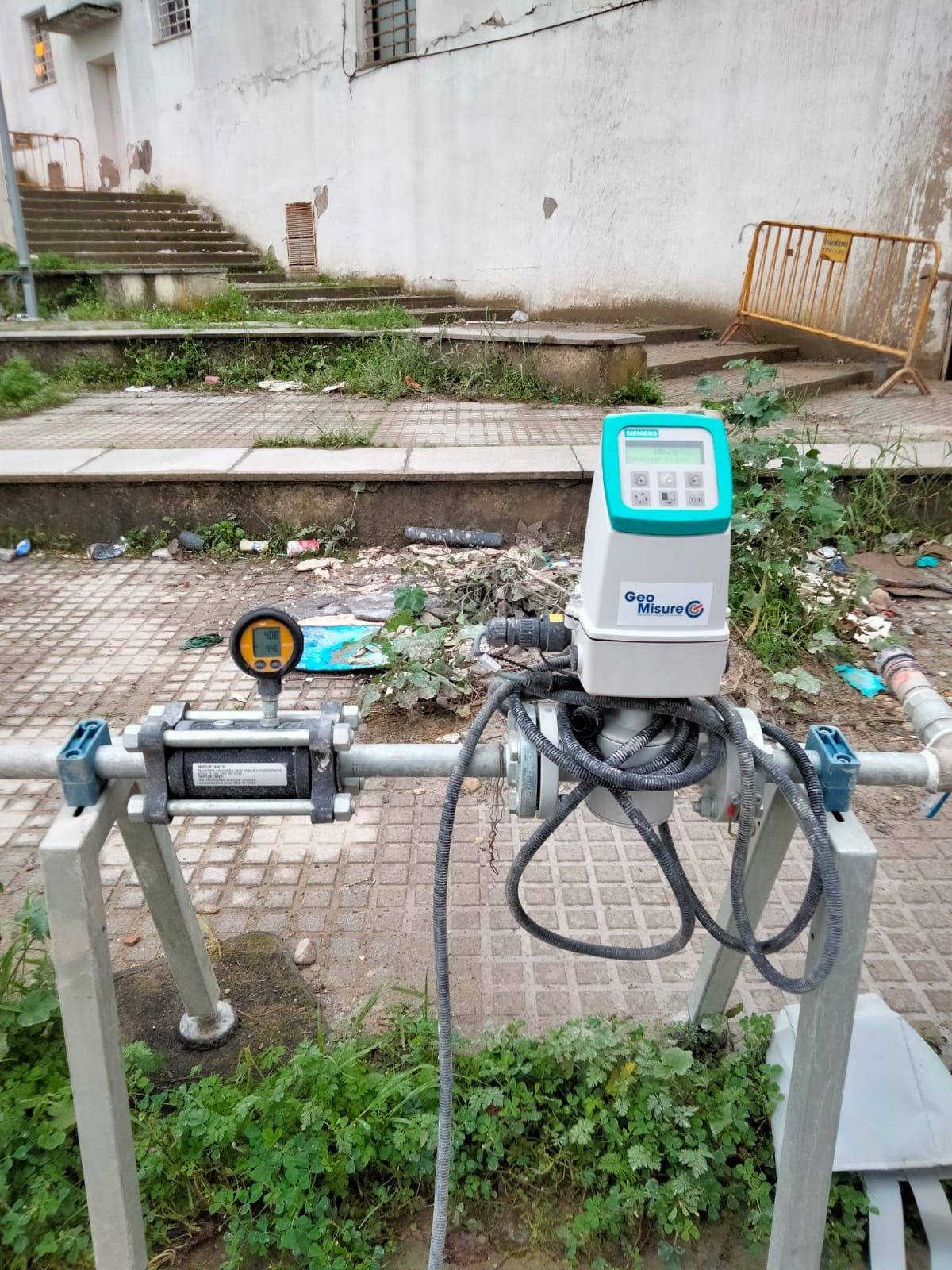
Monitoring grout flow and pressure